Dream Based Education System and Dream Based Life-Long Learning & Development
An education system which does not exist but must to turn India into Vikshit Bharat before it turns 100 !
Can we image a world where every kid loves to go to school?
Can we imagine a world where Curiosity is not killed for Conformity?
Can we imagine a world where every L&D initiative in corporate world results in success?
Can we imagine a world where people love to learn to grow & grow to give irrespective of who they are or what they do?
The response lies in Dream Based Education System and Dream Based Learning and Development. Curious to know and explore about dream based education and Learning & Development, dive into article written by me. Adoption of Dream based education and Dream based learning and development System approach is must to make vikshitbharat a real one before India turn 100.
The ultimate dream is to design the world where every dream finds its way.
Dream-1: Those who dream to get food twice a day , clothes to wear, and home to live must get opportunities to succeed without fail ..!
Dream-2: Those who dream to give better life to their parents and family by becoming part of dream of others people must get opportunities/jobs to express their talent and skills to live life with dignity.
Dream-3: Those who are in corporate jobs and dream to learn and grow to occupy better aspirational opportunities/positions within their dream organization must get dream based learning and development opportunities. And it will be possible if established organization realign their efforts to reap the benefits of dream based learning and development for the long term larger interest of the organization.
Dream-4: Those who dream to work on their own dream ideas must get conducive ecosystem to make their dream ideas real one.
Looking forward to understand your perspective in comment below on how dream-based education and dream-based Learning & Development approach can empower each one of us to make world a better place.
Abstract
Dream-based education system and Dream based lifelong learning and development positions personal aspirations—the “dreams” of individuals—not merely as passive hopes but as dynamic drivers of continuous education and self-development. This approach harnesses the motivational, imaginative, and goal-oriented power of dreams for reimagining how learning is designed, delivered, and sustained across the lifespan and learning contexts, from classrooms to corporate boardrooms.
Introduction
What do you Want2Be and What’s your Dream is one of the most frequently asked questions to everyone since childhood. The response to these questions keeps on changing as we grow in life. And this change in dream creates need to learn and acquire new skill sets to create, nurture, sustain and lead that Dream World. As we grow, our dreams keep on changing but there comes a time in life when your dream is big enough for which even entire life is not enough to materialize it, but it fuels you to keep on working for it till your last breath and leave a legacy to be carried forward by the coming generations.
However, inner motivation to create, nurture, preserve, sustain, and lead that dream world is highest when the dream world resonates with us. Every one of us, irrespective of age, loves to create the world which we love to live in and to do that we need skills sets to make it happen.
Dreams are not what you see while you sleep but dreams are what do not let you sleep. Dream is something which gives you purpose to wake early in the morning. Dream is something which makes you self-driven for the purpose. Dream is your true invisible Why which powers you to do what you do, how you do, when you do, where you do, to what extent you do. Dreaming is something which lets you do your best and perform your best whatever you do in life. Therefore, it would not be wrong to say, “People do and perform their best when they work for their Dream.” is a universal truth.
Dream and Its Relationship to Inner Power and Energy
At the heart of every dream lies an inexhaustible source of inner power— the unique energy that fuels human ambition and action. Dreams act as catalysts for continuous self-discovery and personal transformation. As individuals work toward realizing their dreams, they tap into reservoirs of courage, resilience, and creativity. This powerful drive transcends comfort zones and harnesses discomfort, uncertainty, and aspiration, enabling people to pursue their desired paths with sustained enthusiasm and meaning.
Theoretical Foundations: Dream Drive and ESCAPE Velocity
Dream Drive in education refers to the intrinsic motivation fueled by personal aspirations and ambitions, serving as the engine that propels learners toward transformational growth. When combined with the concept of ESCAPE Velocity, it symbolizes the critical juncture where an individual or student is empowered to break free from limiting influences—such as conventional expectations, institutional boundaries, or self-doubt—and pursue learning autonomously, sustaining lifelong development even outside formal structures. Achieving this “velocity” in learning not only ensures competence but also instils lasting self-direction, which is essential for continued personal and professional evolution.
Dreams, as conceptualized here, refer to authentic personal aspirations, encompassing career ambitions, creative visions, and life goals. Lifelong learning is increasingly recognized as an intentional, self-directed activity rooted in personal motivation and reflective self-awareness. A dream-based education or learning and development framework situates learners as active agents, fostering autonomy and voluntary learning—a departure from hierarchical, instructor-driven models symbolizing traditional education system. Traditional educational models have often centered on knowledge transmission and standardized curricula, frequently neglecting personal motivations that drive curiosity and persistence. Dream-based learning challenges this paradigm, advocating for the integration of individual aspirations as core elements in the design of educational and professional development experiences.
Relevance and Impact in Education Systems: Schools, Colleges, and Universities
· Cultivating Self-Directed Learners: Embedding dream-based methodologies supports project-based, personalized, and experiential learning. This encourages students to pursue meaningful questions, connect learning to life goals, and develop confidence as independent thinkers, thus promoting lifelong curiosity and adaptability.
· Fostering Creativity and Agency: Children who envision and articulate their dream futures—often using creative play and imaginative projects—develop creative problem-solving skills and greater self-efficacy in navigating complex future challenges.
· Reforming Pedagogies: Progressive curricula are increasingly designed with student aspirations in mind, allowing for flexibility, choice, and relevance in learning trajectories, as emphasized in educational reforms like the NEP 2020 in India.
Corporate and Professional Contexts
· Workforce Agility and Motivation: In rapidly changing markets, organizations benefit when employees align professional growth with personal dreams. Learning and development programs that incorporate career aspirations increase employee motivation, foster engagement, and facilitate organizational adaptability.
· Closing Skills Gaps: Organizational training shifts from rigid skill matrices to dynamic, purpose-driven development, empowering workers to pursue competencies relevant to both corporate objectives and personal visions for growth.
· Continuous Professional Renewal: Dream-based learning supports employees in lifelong upskilling and reskilling, promoting both retention and cross-functional innovation as personal and corporate goals intersect.
Mechanisms and Practices
· Dream Crafting as Pedagogy: Structured processes help learners articulate, visualize, and iteratively refine their dreams, using tools like reflective journaling, mentorship, and goal-mapping exercises.
· Integration of Formal and Informal Learning: Lifelong learning ecosystems blend formal coursework with informal, on-the-job experiences and self-driven exploration in pursuit of dreams.
· Mentorship and Community Support: Both educational and corporate environments that nurture mentorship enhance the translation of dreams into actionable learning objectives and long-term plans.
Transformative Benefits
· Personal Empowerment: Dream-based approaches instil a sense of ownership and agency, increasing learner engagement, resilience, and satisfaction across ages and settings.
· Systemic Adaptation: Education and corporate systems become more responsive, inclusive, and capable of addressing diverse motivations, talents, and societal needs when built around learners’ dreams.
· Innovation and Lifelong Growth: By connecting learning to evolving dreams, individuals and organizations are better equipped to embrace continuous transformation, creativity, and meaningful contribution.
Organizational Dream and Its Relevance for Human Resources Function
Organizational dreams serve as guiding beacons, shaping the values, culture, and overarching purpose of an enterprise. For Human Resources, articulating and aligning these dreams translates into inspired recruitment, onboarding, and engagement practices that foster a sense of belonging and shared purpose among employees. When employees internalize organizational dreams as their own, HR professionals facilitate a culture where individuals proactively contribute to organizational performance and are more likely to thrive within dynamic, collaborative environments.
Dream based Learning & Development Practices
Establishing Learning & Development (L&D) frameworks on the foundation of dreams allows organizations to move beyond generic skill-building to nurture authentic growth based on individual motivation and aspiration. Such dream-inspired L&D leverages creative expression, experiential practice, and life skills development, supporting learners as they clarify and pursue their personal and professional ambitions. By placing dreams and goals at the center of L&D, organizations can create transformative programs that help individuals navigate adversity, develop the competencies needed for success, and flourish in both employment and life.
Hyper Personalization with AI to Make Dream-Based L&D Practically Feasible
AI-enabled hyper personalization can unlock the true potential of dream-based learning and development by tailoring educational journeys to each learner’s unique strengths, aspirations, and emotional states. Through generative AI and emotional intelligence analysis, educational platforms can instantly personalize content, feedback, and skill development paths. This technological revolution automates administrative tasks and data analytics, freeing educators to focus on mentorship while enabling learners to receive continuous, relevant, and adaptive support—a critical factor in sustaining lifelong learning and achievement.
Concept of Ideal Organizational Culture and Leadership Challenges
The ideal organizational culture is one where leaders succeed in harmonizing individual and collective dreams, ensuring employees see the organization’s ambitions as extensions of their own. The challenge for leaders is to recruit, onboard, train, and nurture talent such that everyone is driven by a shared vision and feels personally invested in the outcomes. Leadership must move beyond transactional management, using inclusive strategies and empathetic engagement to inspire self-driven performance that advances both personal growth and organizational success.
Dreaming, Doing, Competencies, and Skill Sets
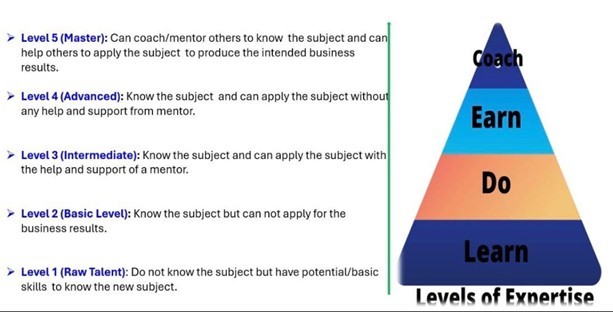
The journey from dreaming to doing is underpinned by the development of core competencies and skills essential for effective action and fulfilment. Purposeful dreaming lays the foundation for self-awareness and vision, while doing—taking persistent, focused action—transforms those dreams into reality. The most successful lifelong learners embody a cycle wherein curiosity, courage, and compassion activate their dream-driven energy, and commitment and skill-building using Learn-Do-Earn-Coach model enable them to achieve their greatest potential.
Challenges and Considerations
While the promise of dream-based learning is substantial, it faces several challenges. For some learners, insufficient structure may result in lack of direction; personalized mentorship may be difficult to scale in larger institutions; and there may be tensions between personal and organizational objectives. Ensuring access and inclusivity across diverse populations also warrants attention. Further empirical research and pilot studies are required to refine implementation strategies and measure long-term impacts.
Conclusion
Dream-based lifelong learning is a transformative principle capable of redefining education for both individuals and institutions. By honoring dreams as a central thread in human development, this approach creates vibrant, adaptive learning systems responsive to the challenges of a dynamic world—whether in schools, higher education, the corporate sector or in Society.
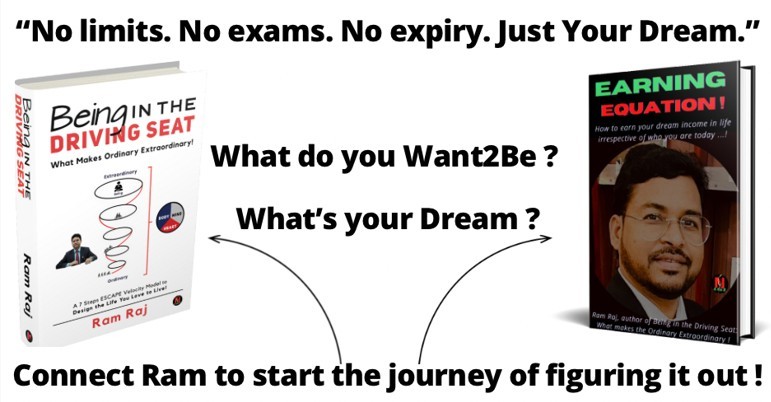
Note: Author is a Certified Karmayogi Coach/Trainer from Capacity Building Commission, Govt. of India, Certified Trainer from ISTD (Indian Society for Training & Development) and MEPSC (Management & Entrepreneurship and Professional Skills Council). His, first published book- Being in the Driving Seat, bagged third position in Best Book Award organized by ISTD.
About The Author
